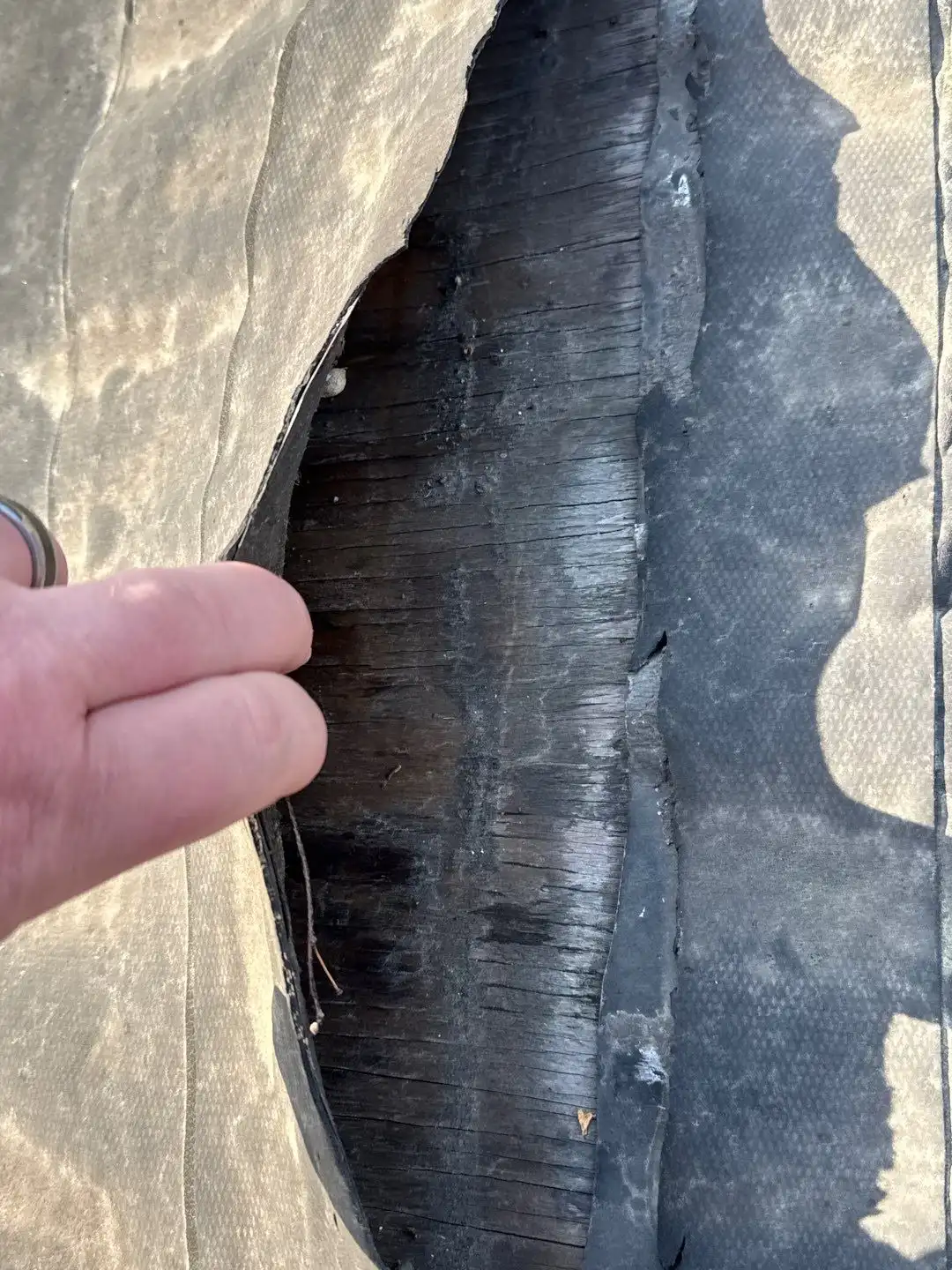
How fast does a commercial roof leak actually need to be addressed?
Faster than most owners think. Once water gets past the membrane, it travels along the deck seams, soaks the insulation board, and finds the lowest penetration point inside. On a TPO or EPDM roof, a single open seam can dump gallons during a heavy Fairmount storm. Insulation that gets saturated loses most of its R-value and usually has to be cut out and replaced, even after it dries. If you wait a week, you are not just paying for a patch, you are paying for insulation, possibly decking, interior ceiling tiles, drywall, and any inventory underneath.
Severity gets assessed over the phone when you call. If water is actively coming in, tarping and temporary dry in get prioritized so the inside of your building stops taking on damage while the permanent repair is scheduled. For property managers with multiple buildings, this triage step matters because it lets you allocate maintenance budget to the leaks that are actively destroying assets versus the ones that are cosmetic. Fairmount Commercial Roofing will tell you which is which on the first call rather than rolling a truck for every drip.
What does commercial roof leak repair cost in Fairmount?
Pricing depends on the membrane type, the cause, and how much wet insulation has to come out. A small isolated repair on a single ply roof is one number. A repair that involves cutting out saturated ISO board, replacing wet decking, and reflashing a curb is several times that. Here is a realistic range for Fairmount commercial work:
What are the most common failure points on Fairmount commercial roofs?
Penetrations cause most calls. HVAC curbs, plumbing vents, conduit, drains, skylights, and parapet wall terminations all expand and contract at different rates than the membrane. Sealant cracks, pitch pans dry out, and termination bars loosen. After those, seam failures on aged single ply membranes are common, especially on roofs over fifteen years old. Hail bruising and storm uplift add another category, and those tend to spike after spring and summer storms move through Central Indiana.
Drains and scuppers are the silent category. A clogged internal drain turns a flat roof into a swimming pool, and the weight alone (a pond two inches deep over a thousand square feet is roughly five tons) can deflect the deck enough to open a seam. Ponding water around a drain also breaks down membranes faster than UV does on the rest of the roof. If your maintenance plan does not include twice yearly drain clearing, you are gambling.
Will insurance cover the repair?
Sometimes. Sudden damage from a storm, hail, or wind uplift is generally covered. Gradual deterioration, ponding water, and lack of maintenance generally are not. The distinction matters and the wording in your policy matters more. We document the failure cause with photos and moisture readings so your adjuster has what they need. If the cause is wear and tear, we will tell you that before you file a claim that gets denied.
Why do leaks keep coming back to the same spot?
Because the visible drip inside the building is rarely directly under the actual breach. Water enters at one location, travels along the deck or down a seam, and shows up ten or twenty feet away. A contractor who just patches where the ceiling stain is will fix nothing. We use moisture meters and infrared scanning to trace the entry point, which is the same approach described in our guide to roof leak origin detection versus repair. If the source is not identified, you are paying for the same repair every six months.
The other reason leaks return is incompatible materials. A TPO roof patched with EPDM-rated sealant will fail in one freeze thaw cycle. Asphalt based mastic on a single ply membrane chemically attacks the plasticizers and creates a brittle spot that splits the next summer. Anyone working on your roof needs to know which membrane is up there and what is rated to bond to it.
What happens during the repair visit?
An inspection comes first, and it is free. We walk the roof, locate the entry point, check moisture in the insulation, and photograph everything. You get a written estimate with the scope spelled out. If the leak is active, tarping or temporary dry in goes on that visit. The permanent repair gets scheduled based on weather and material availability. For single ply work, we need a dry deck and temperatures the membrane can be welded or adhered in, which means some winter repairs require heated enclosures or a temporary fix until conditions improve.
How can I prevent the next leak after this one is fixed?
Two simple habits prevent most repeat calls. First, get on a semiannual inspection schedule, once in spring after the freeze thaw cycle and once in fall before winter sets in. Catching a lifted seam or split pitch pan during a planned visit costs a fraction of an emergency call. Second, keep a roof log. Every time an HVAC tech, satellite installer, or solar contractor goes on the roof, note the date and what they touched. Most leaks that show up six months after foot traffic trace back to someone who dropped a tool or walked across a cold membrane and cracked it. Fairmount Commercial Roofing can set up an inspection plan for your Fairmount property that fits the age and type of your roof, and we keep the photo records on file so you have a baseline when something does go wrong.
What about interior damage from the leak?
This is where commercial roof leaks get expensive quietly. Wet ceiling tiles, soaked insulation in the plenum, stained drywall, warped flooring, and mold growth inside wall cavities all add up. If the leak has been active for more than a couple of days, you almost certainly have interior work to do alongside the roof repair. We coordinate both so the roof gets dried in first, then the interior gets dried and rebuilt. The same crew approach we use on commercial water damage restoration applies here, just starting from the top down.
Tenant occupied buildings add another layer. If your lease assigns roof maintenance to the landlord and interior finishes to the tenant, the documentation of cause and timing protects both parties from a fight later. We provide dated photos and moisture maps that both sides can reference.
Should I repair, restore, or just replace the roof?
Three honest questions decide this: how old is the membrane, how much of the insulation is wet, and how many repairs has the roof already had this year. If the membrane has a few years of service life left and the wet area is contained, a targeted repair is the right call. If you are patching the same roof three or four times a season, you are funding a slow replacement with no warranty at the end. We walk through the math with you in our commercial roof restoration vs replacement cost comparison so you can decide based on numbers, not pressure.